Jicama Disease Diagnostic
Upload a photo of your plant to check for diseases, pests, or nutrient issues and receive a full care plan.
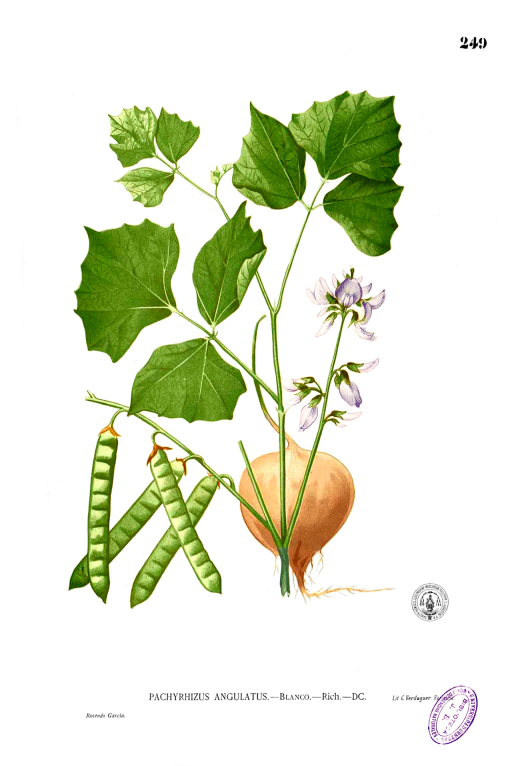
Jicama
Jicama, scientifically known as Pachyrhizus erosus, is a species of vine native to Mexico and Central America, widely cultivated for its large, edible, tuberous roots. The plant grows as a vigorous herbaceous vine that can climb significantly if provided with adequate support, producing compound leaves and purple or white pea-like flowers. While the crisp, sweet, and starchy root is a popular culinary ingredient prized for its high water content and dietary fiber, the rest of the plant, including the seed pods, leaves, and vines, contains a toxic organic compound called rotenone. This compound makes the vegetative parts highly toxic to humans and animals, serving as a natural defense mechanism. Jicama thrives in warm, frost-free tropical and subtropical climates, requiring well-draining soils and abundant sunlight to develop its characteristic sweet tubers over a long growing season.